ADA-Compliant Rails
ADA Handrail Solutions
Accessibility and safety are important considerations for any commercial property. During new construction, renovations, or facility upgrades, property owners may need to evaluate existing railings and accessibility features to align with applicable project requirements and accessibility standards.
Tampa Bay Hand Railings provides custom ADA handrail and commercial railing solutions for businesses throughout the Tampa Bay area. We work closely with property owners, contractors, and project teams to deliver attractive, functional, and professionally installed railing systems tailored to each project's unique needs.
ADA Handrail Guidelines
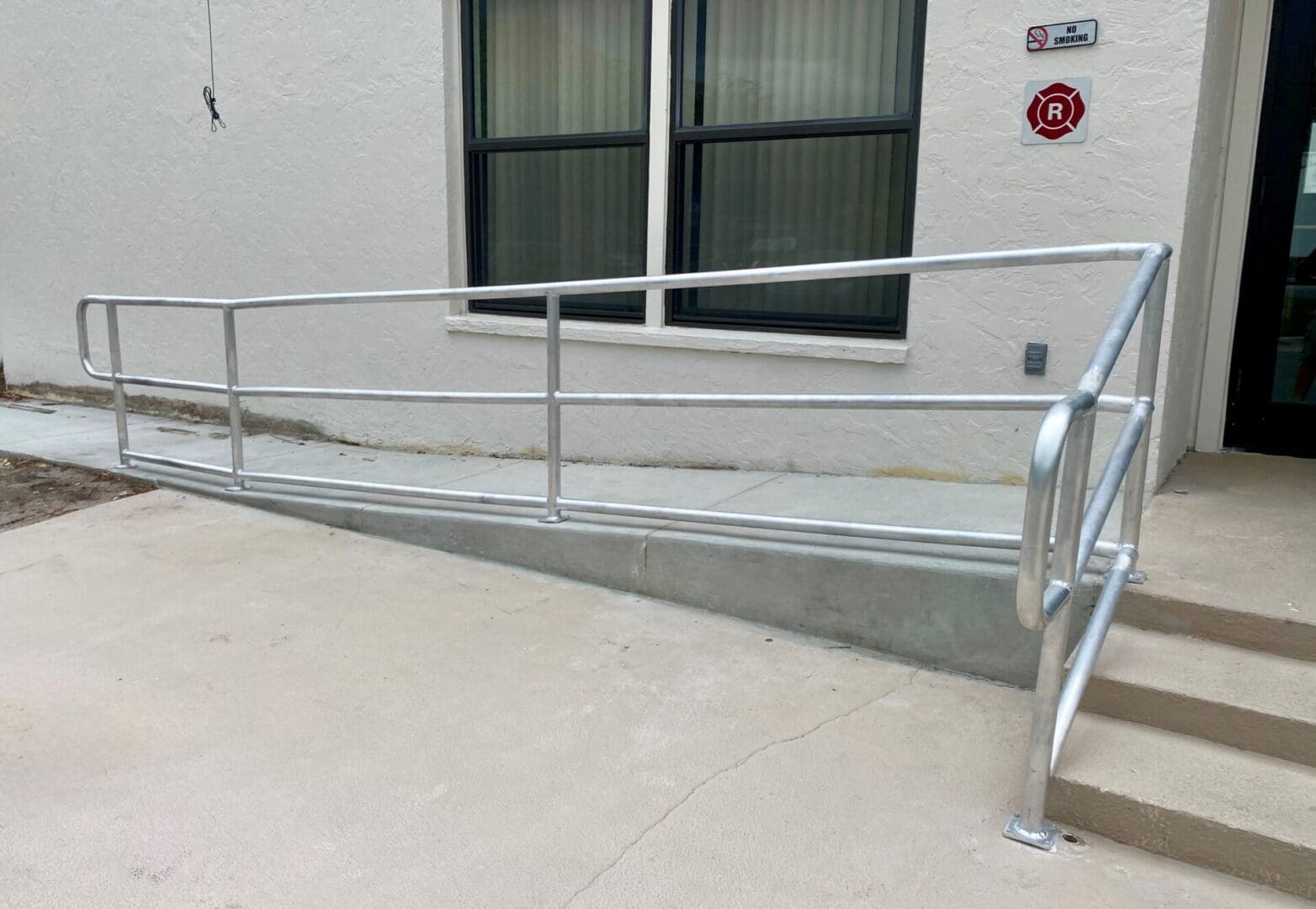
Handrails designed to meet applicable ADA and accessibility requirements are an important component of accessible commercial properties. Properly designed and installed handrails provide stability and support for individuals navigating ramps, stairs, and other changes in elevation, helping create a safer and more inclusive environment for employees, customers, and visitors.
The Americans with Disabilities Act (ADA), Florida Accessibility Code, and applicable building codes establish requirements for handrail design and installation. While requirements may vary depending on the type of facility, project scope, jurisdiction, and applicable code provisions, the following examples reflect commonly recognized ADA and Florida Accessibility Code standards; however, requirements may vary based on project conditions, building type, jurisdiction, and future code revisions:
- Handrails installed between 34 and 38 inches above the walking surface.
- Circular handrails with an outside diameter between 1¼ inches and 2 inches.
- A minimum clearance of 1½ inches between the handrail and adjacent surfaces.
- Handrails on both sides of ramp runs with a rise greater than 6 inches.
- Continuous, secure, and graspable handrail surfaces where required by applicable accessibility standards.
Meeting accessibility requirements involves more than adhering to specific dimensions. Factors such as ramp configuration, stair design, handrail extensions, mounting methods, occupancy type, and local code requirements must also be considered. Tampa Bay Hand Railings works with property owners, business owners, contractors, and project teams to provide railing solutions designed to meet applicable accessibility and building code requirements while enhancing the appearance and functionality of the property.
Disclaimer
The information on this page is provided for general informational purposes only. Accessibility requirements, building codes, and regulations may vary by project and jurisdiction and are subject to change. Final compliance requirements should be verified with the appropriate design professional and authority having jurisdiction.
Our Services and Materials
We are committed to delivering durable railing systems designed to meet applicable accessibility and building code requirements while enhancing both accessibility and appearance.
Schedule a consultation today by calling (813) 909-3016.